Locations






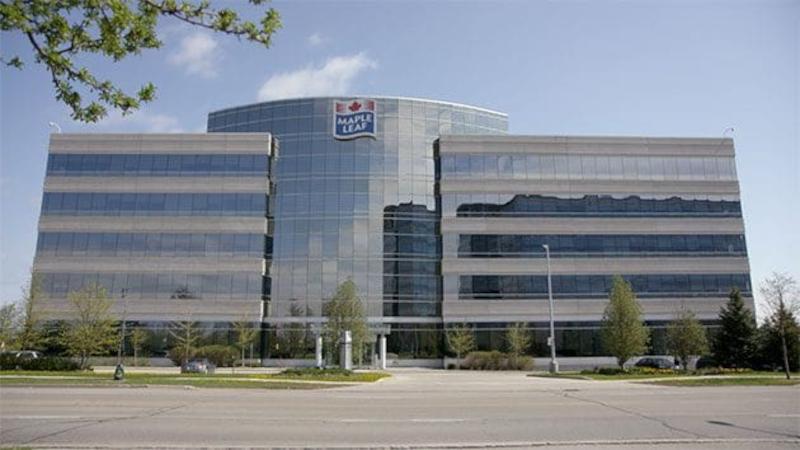
Maple Leaf Foods continues to see impressive results after spinning off its pork-producing division into a separate entity known as Canada Packers.
Sales for Maple Leaf Foods rang in at $963 million compared to $907 million for the same period last year – an increase of 6.2 per cent. EBITDA rose 5.7 per cent year-over-year to $122 million.
“Our transformation into a purpose-driven, protein-focused, brand-led CPG (consumer packaged goods) company is delivering tangible results. With leading brands, scalable growth platforms, and initiatives like Fuel for Growth strengthening our cost structure, we are on track to deliver our 2026 outlook of mid-single-digit revenue growth, continued margin expansion and disciplined capital allocation,” Curtis Frank, president and chief executive officer of Mississauga-based Maple Leaf Foods, said in a press release accompanying the release of the financial report.
It reported a gross profit of $180.4 million for the three months ending March 31, which topped last year’s margin of $154.1 million. Adjusted basic earnings per share was $0.34 for the quarter compared to $0.21 for the same period last year.
The firm also lowered its net debt ratio to 2.1X, an improvement from 2.6X at the end of the first quarter last year, coming in at slightly higher than $1 billion.
War-based fuel inflation costs to be passed on to consumers
Post spinoff, Maple Leaf Foods today consists of two operating units: prepared foods and poultry. The poultry operating unit represents approximately 40 per cent of sales, and the prepared foods operating unit represents approximately 60 per cent of sales, according to the company.
But the news was not all positive as higher fuel prices have forced the company to raise prices to respond to current events.
“Food inflation remains an active area of management focus. Geopolitical developments, including the conflict involving Iran, are affecting energy markets and increasing transportation costs in the near term. In addition to the inflation-based pricing actions implemented in February, we have introduced a temporary fuel surcharge as a direct pass-through tied to higher transportation costs. This provides transparency around the underlying drivers of those increases and will be removed if or as fuel markets normalize,” Frank said during an earnings call.
He was asked by an analyst how long this should last. “The consequence of that is typically a little bit of volume trade-off in the near term that typically plays out for a quarter or two, maybe at the most, before normalizing,” Frank said.
Looking south for growth opportunities
The Canadian company is also not sitting still on its local business, as it promises to ramp up its U.S. purchase strategy.
“We continue to be in the early innings in the U.S. market, and we see many more opportunities to continue to grow our business there organically and by acquisition,” Frank said.
The company also earlier this week announced a relaunch of the Yves brand, which it acquired recently. Yves produces plant-based protein products.
Overall, the company is well on its way to a strong future in both income and profit categories, he said.
“We are targeting approximately $5 billion in revenue, approximately $750 million in adjusted EBITDA and cumulative free cash flow of approximately $1.7 to $1.8 billion by 2030 while maintaining an investment-grade leverage below three times net debt to adjusted EBITDA,” Frank said.
“Our 2026 outlook demonstrates progress toward these ambitions.”


 Industry Events
 Locations