




 Locations

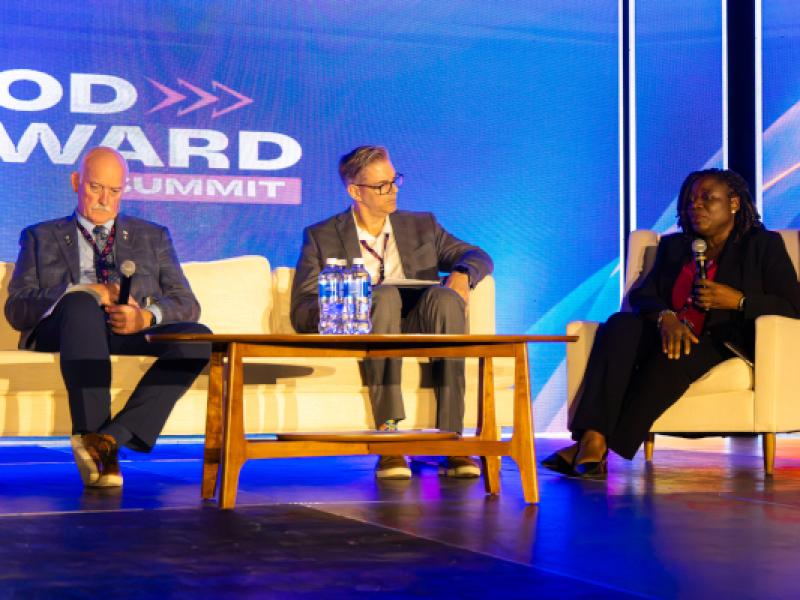




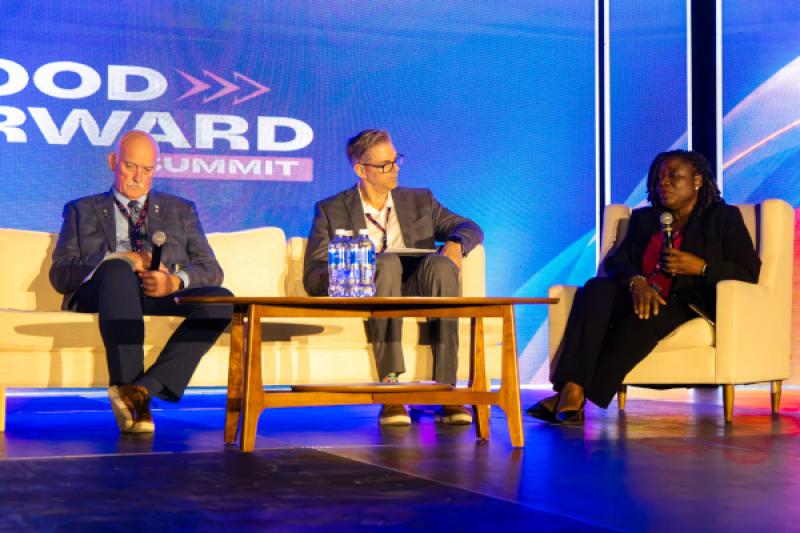
Artificial intelligence (AI) could help Canadian farmers save time, reduce costs and improve farm management, but adoption remains low as producers weigh the potential benefits against the costs, panelists said at the recent Food Forward Summit.
Keith Currie, president of the Canadian Federation of Agriculture, told the event held in Mississauga, Ont. that farmers need to see tangible benefits before investing in AI.
“There has to be some seen value. Is it going to save me labour? Is it going to save me time? Is it going to save me money? Is it going to enhance: from an environmental aspect, from a business aspect?” Currie said during a discussion entitled, Who Owns the Future: Canada’s $13 Billion Ag Data Opportunity.
For farmers, the bottom-line results remain critically important in making investment decisions.
“We also need to see where that real value is in the uptake of any investment you make, whether it’s a capital asset or whether it’s technology, so I think those are some of the risks that are out there that farmers are seeing as to why this number maybe isn’t quite as high as where it might be because at the end of the day, it still has to be about making money.”
Low rate of adoption for AI
While high technology costs may cause trepidation for some, collecting data is not new to the farming industry.
“Farmers and producers have been doing this forever. They look at the weather; they look at the soil conditions, the crop yields, market prices, all kinds of information to decide what to do next,” Saif Ahmed, chief data and AI officer with NL Eats and panel moderator, said.
“And what’s changing is how much information we can now collect, and what technology can help us do with it.”
According to Statistics Canada, only 4.5 per cent of Canadian businesses in the agriculture, forestry, fishing, and hunting sector are currently using some form of AI.
Currie questioned whether the figures fully capture AI use on family farms, which he said account for 98 per cent of Canadian farms.
“Who filled out the census form to Stats Canada regarding how much AI interaction they’re having on the farm? If it was Grandma and Grandpa, they may not fully understand whether there is actually AI integration on the farm or not. Versus, say, a 20-year-old cousin of someone who’s operating a piece of the farm.”
“It’d be interesting to find out what those numbers are, because it might change. But nevertheless, the numbers are small,” he said.
Currie cited GPS and AutoTrac, John Deere’s automated tractor-steering technology, as examples of technologies that farmers have used for more than 20 years.
New technology reliant on AI
Despite low adoption among farmers, investment in AI-enabled agricultural technology is continuing, according to another panelist.
“What’s the common thread to all this as we’re getting to commercialization? It’s artificial intelligence. Over 90 per cent of any project we’ve touched has either brought forward new AI-based technology or relied on AI technology,” Darrell Petras, chief executive officer, Canadian Agri-Food Automation and Intelligence Network (CAAIN) said.
“It’s happening. It’s maybe not happening here yet as quickly as the world.”
The federal government-funded organization has invested in approximately 50 projects since 2021, he said.
And there is real value being realized, according to Petras, pointing to a company that provides data analytics and farm management software and was provided with funding of $800,000 from CAAIN.
“CATTLEytics offers over cash savings and time savings up to an hour or two per day for their management report,” Petras said.
Difficulty in knowing what to fund
Government officials also face challenges in determining where to direct funding, Ima Okonny, assistant deputy minister and chief data officer with Employment and Social Development Canada, said.
“Our geography is so diverse, and then we have areas that are remote. How do we optimize policy making so that we can make sure we’re getting the best reality for communities as we move forward? If we’re just talking about AI and data instead of talking about it from an innovative point of view, without really bringing it back to what is needed for farmers, at the end of the day, you’re going to have very low adoption rate,” she said.
Data ownership is another major concern for farmers, Currie said.
“I think for producers that I represent, the single biggest fear is around the data-ownership piece. Farmers inherently don’t want to give up data. It’s just a natural part of their DNA so there may be some hesitation until we understand more.”
“But I think you’re going to see over time that they are going to really jump into it because there’s a tremendous opportunity right now for agriculture, but there’s some other barriers as well.”




 Industry Events
 Locations

