




 Locations





As food banks struggle to meet rising demand, two Canadian organizations are investing millions in new facilities to process surplus food, reduce waste and get more nutritious food to people who need it.
“We are a food rescue organization, and often we get large format foods, bins and bins of one commodity or another — potatoes or carrots or something — and you need to transform that before you can move it into the charitable sector,” Lori Nikkel, chief executive officer of Second Harvest told FoodNX in an interview.
“So the idea is ‘How do we cut it, flash freeze it, and serve that food into the community?’” she said.
$2-million investment
Second Harvest recently opened a new facility that it says will better serve the community. “From design, permitting, construction, getting all the equipment, it took just under a year to get it all in, and the cost was about just around $2 million,” Nikkel said.
The new production component of its Etobicoke, Ont. facility is more than 2,000 square feet and it will operate with about 10 to 14 employees when fully functional, she said. It will be able to process 750,000 pounds of produce each year.
Second Harvest occasionally receives surplus produce, including carrots, celery and peppers, that it previously lacked the equipment to process at scale. Its new facility will allow the organization to handle much larger volumes.
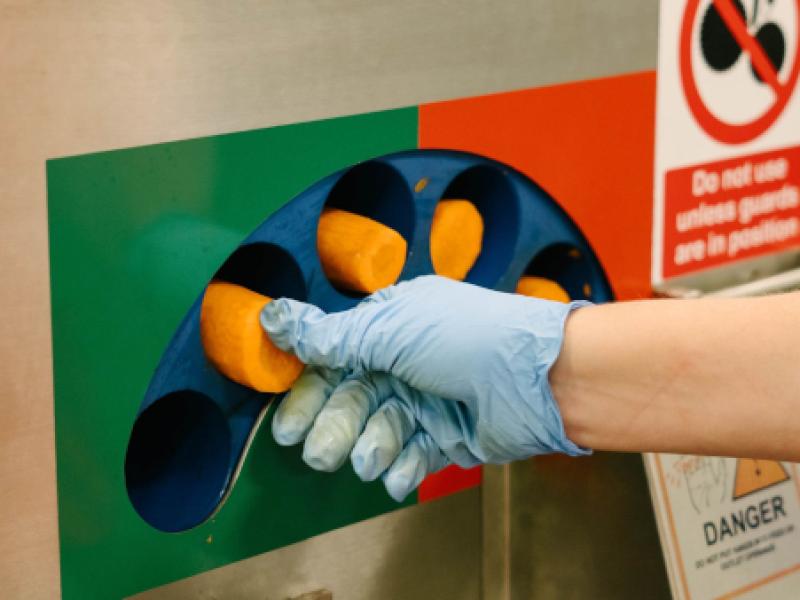
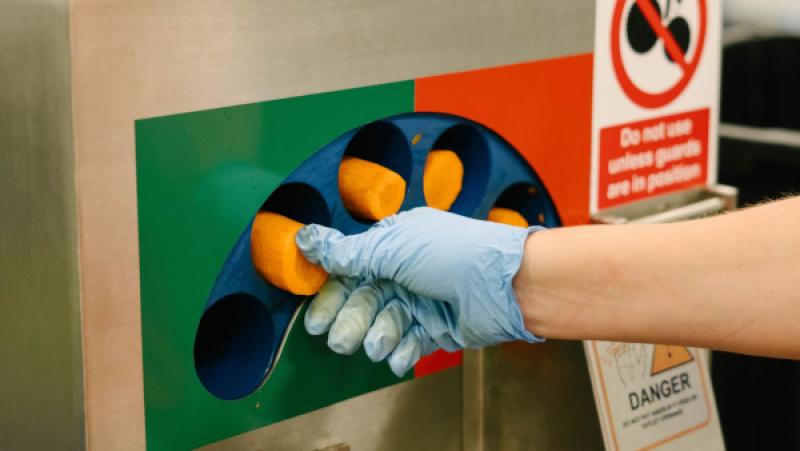
“It peels, washes, cuts, vacuum bags (the food) from start to finish. You get a whole carrot, at the end you’ve got a bag full of carrot sticks in a vacuum-sealed bag,” Nikkel said.
New Manitoba centre in the works
Toronto is not the only city that is building bigger to address food insecurity. Winnipeg-based Harvest Manitoba has unveiled plans for an even bigger facility.
The 100,000-square-foot Manitoba Food Transformation Centre is expected to open in 2029, doubling the food bank's current processing capacity to over 30 million pounds per year.
The $46-million facility recently received a $5 million donation toward the construction.
“This is a project that’s been in development for more than two years now, as we’ve been dealing with record high need at Harvest Manitoba for food security programs that we run, from food banking to support that we provide to over 400 agencies across the across the province; school nutrition programs, infant support,” Vince Barletta, Harvest Manitoba chief executive officer told FoodNX in an interview.
“The reality is the facilities that we’re in today simply aren’t able to keep pace with the volume demands that our programs require.”
While Harvest Manitoba works on securing all of the needed funding, plans are being finalized, he explained, for a start to construction in 2027.
“We’re hopeful that within this coming year, we’ll be able to solidify all of that, so that we can begin either construction of a new building or renovation of an existing one.”
The organization says it assists 60,000 Manitobans a month from its Winnipeg base but also 50 communities outside the city. That number has more than doubled over the last five years, Barletta said.
Its implementation will add to the current total of 70 employees. “The expectation is that there’ll be some growth in the workforce as we bring in those new transformation activities from a larger commercial kitchen to produce, packing and just more shipping and receiving capabilities,” he said.
Expanding food rescue and processing
Once operational, the facility will be able to take a advantage of the “hundreds of thousands of tons of avoidable and edible food waste that is available here in the province of Manitoba every year,” he said.
Canada wastes an estimated $58 billion worth of food annually, underscoring the scale of the challenge.
“Some of that is tougher to get, but our potatoes, onions, other root crops; seasonal vegetables, those sorts of commodities are available to us. Our facilities today simply lack the available cold storage to be able to handle those surplus products in the volumes that they’re available.”
Like Second Harvest's new facility, Harvest Manitoba's will add food processing capabilities, expanded cold storage for flash freezing, and will increase current operations.
“We have commercial kitchen facilities today where we do some food production, but in a larger space able to handle higher volumes, being able to take some of our seasonal products: pumpkins and squash, making soups and purees that we’re able to support food security programs with as well,” Barletta said.
The federal government’s recently announced food security strategy also provides more support for the charitable sector to the tune of $20 million.
Supporting local farmers

Second Harvest's new facility will also create a market for farmers by purchasing produce that can be processed and distributed through the organization's food-rescue network, Nikkel said.
“We’re not using surplus food. This is all purchased from farmers, so it gives farmers a market that they don’t have access to, and so let’s open a market for them, and that’s what is so critical about this country,” she said.
“We’re a country of SMEs (small- and medium-sized enterprises), and we need to support the farmers better.”
In Manitoba, the new food centre will also provide increased on-the-job education opportunities.
“Trainees are getting education and training on our warehouse floor: a six-week program where they are learning how to use the inventory management tools; forklift operations, order filling, the classroom components of that, all the safety pieces they need, and we’re getting them out into jobs in the private sector in the warehousing and distribution space here in Manitoba,” Barletta said.





 Industry Events
 Locations

