Locations



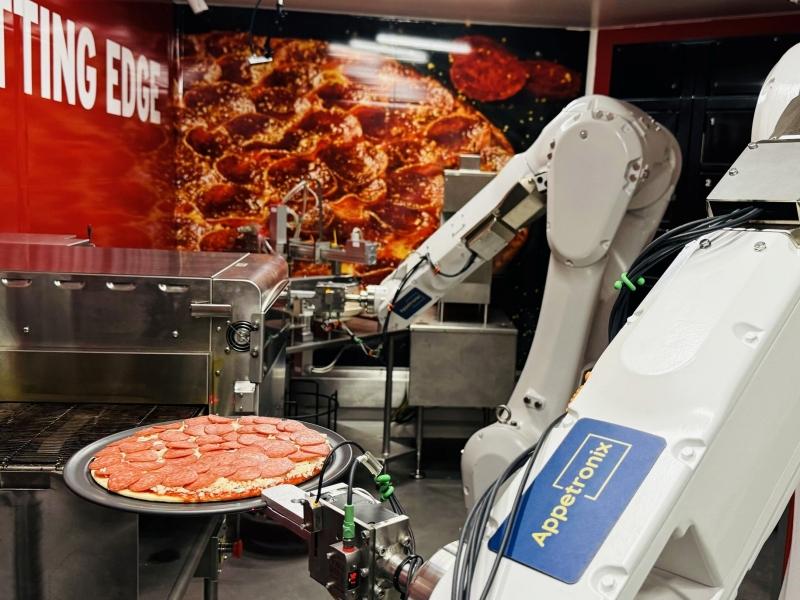




The agriculture industry in Canada is falling behind when it comes to artificial intelligence (AI) technology, mainly due to multiple systemic barriers, according to a new report by Farm Credit Canada (FCC).
The organization said that currently, only a miniscule percentage of producers are deploying the advanced technology to help make better decisions on the farm.
“We have less than two per cent of the sector (1.8 per cent) that’s already adopted some sort of AI components, and if we look at the Canadian economy as a whole, we’re slightly over 12 per cent, so agriculture is lagging behind in Canada, and Canada is lagging behind globally as well,” Craig Klemmer, agricultural economist and manager, thought leadership with FCC told FoodNX in an interview.
The report, AI in Canadian Agriculture: Present Challenges and Future Prospects, was co-authored by FCC and Deloitte.
“We wanted to provide some context around the topic of AI, and point out what is the opportunity for Canadian agriculture and how this technology can leverage to really drive value for their businesses,” Klemmer explained.
Barriers to fruitful AI adoption
Canada ranks 25th in the world in private investment in agricultural R&D, the study found.
Overall, four key barriers were identified:
- Shrinking capital investment;
- ongoing talent shortages and skills gaps;
- full broadband internet shortfall, especially in rural areas; and
- governance challenges.
“I don’t think they’re insurmountable, but they are challenges,” Klemmer said.
For its part, FCC has recently committed to $2 billion in agriculture and food innovation, through its new investment arm, FCC Capital, and a further $5 billion pledged in the agriculture and food industries from FCC and more than 20 investment organizations.
“It’s about bringing that capital together to find firms out there that we can be investing with, whether it’s FCC or these other partners, and catalyzing that industry to bring capital into the market and bring that excitement.”
But in addition to simply throwing more money at the shortfall, Canada needs to ensure there is a robust education around advanced technologies, according to Klemmer.
“One of the challenges we have is skill gaps, so it’s about training up people, and schools around Canada are continuing to increase their enrollment. When it comes to that talent, it’s getting people into the sector that know this technology that can skill up other people.”
Canada will continue to have “strong demand” for more education opportunities in AI.
“This is going to be a moving target as we continue to see the acceleration of new technologies coming on. We’re going to continue to see new programming happening, and I think our education system in Canada is up to the task. Whether that’s looking at trade schools, at universities, or it’s going to look at extension programs through provincial and federal programs,” Klemmer said.
No reluctance to explore new technology
The low adoption rate might suggest that farmers are old-fashioned and not interested in the new technology but that’s not the case, he said.
“If you go to the farm shows and you see these new technologies, whether it comes to drones to help during spring, or some automation there that’s going to make things happen, producers know that this doesn’t happen without having AI in the background and allowing them to bring all that data together.”
“I do believe that like all industries, there’s going to be those early adopters that are super-excited about it,” Klemmer said.
With all of the economic turmoil lately, combined with ever-present adverse weather events, having more intelligence is a natural for the industry.
“AI technology is going to allow them to make stronger decisions; more timely decisions, it’s going to drive profitability for their operation, as well as make really good decisions that are going to help move the industry forward. I think Canadian farmers are very much on board on that,” he said.
“It’s about exposure to the tools and seeing the opportunities, and I think we’re going to see that snowball start rolling faster and faster as we get comfortable with the technologies and we start really seeing that value driving to the farm.”
New tools for farmers
To help drive that exposure, FCC has released a free generative AI tool called Root AI, which operates as a virtual assistant.
“It’s an agronomy program that allows farmers to facilitate decision-making. FCC is making significant investments in Root AI and see this as an opportunity to really upskill the industry; upskill our customers and producers to act and make decisions quicker and add some velocity to that decision-making process,” Klemmer said.
FCC also offers farm management software AgExpert, that provides such things as accounting and payroll, as well as field inventory tracking, managing crop rotation data, among other things.




 Industry Events
 Locations