Locations








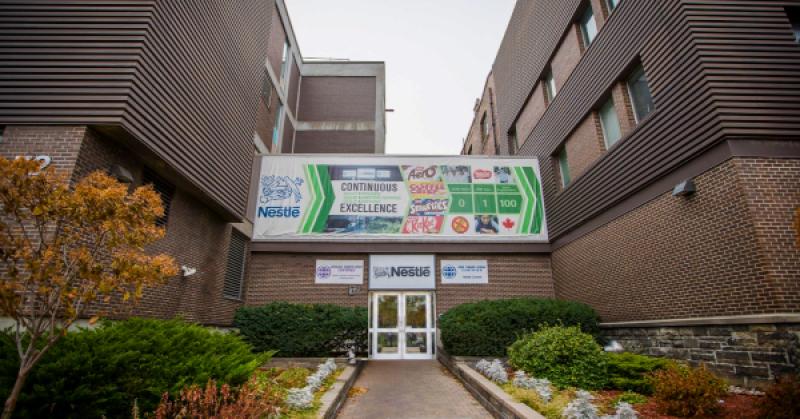
Nestlé Canada has invested more than $50 million in a Toronto confectionery factory that has been making chocolate for more than a century, adding new production capacity and equipment to support some of the company’s best-known brands.
“The new line is designed to produce both Kit Kat and Aero, which gives the factory real flexibility to support growth across our key brands," Greg Coles, business executive officer, confectionery at Nestlé Canada told FoodNX in an email interview.
"It’s also a vote of confidence in Canadian manufacturing and in the local supply chain around us, from ingredient suppliers to packaging partners and domestic logistics,” he said.
The factory — located on Sterling Road in the Dundas West area of the city — produces such well-known confections as Kit Kat, Aero, Smarties and Coffee Crisp for the Canadian market.
A Toronto factory with a long history
It was built in 1886, and Nestlé Canada acquired the facility in 1988. Approximately 550 employees work at the factory.
Overall, Nestlé has approximately 3,500 employees in Canada across 12 offices and warehouses, and two factories. Globally, it also produces other food brands, such as Nesquik, Häagen-Dazs, Nescafé, Perrier, Nespresso, Gerber and Nestlé Purina.
The multi-year project also added new production space, advanced manufacturing equipment and expanded site utilities, according to Coles.
As well, the company took into account some of the needs of the local community, he said. “We also redesigned the site layout to improve flow and reduce traffic disruptions.”
The company “relocated shipping docks to reduce road congestion for the local community,” Coles said.
“The Nestlé factory is one of the few urban factories of its kind, so the neighbourhood is genuinely a consideration in how we operate. The redesigned layout optimizes site logistics and helps reduce traffic disruptions on Sterling Road for the surrounding community, mainly from trucks moving in and out of the site,” he said.
Investment amid industry uncertainty
The move comes at a time of price volatility in the food business but Nestlé is hoping that by doubling down on producing its more successful confections, it is well-placed to weather any storms.
“Canadians are price conscious and more deliberate about what they buy. But confectionery holds up well in that environment because it’s still part of everyday moments of joy, and when people are being selective, they tend to go with the brands they know and trust,” Coles said.
In addition to pricing pressures, food manufacturers are being confronted with the “need to keep supply chains resilient and responsible.”
“Rising costs and global uncertainty require manufacturers to stay agile while continuing to deliver value,” he said.
Global uncertainty is also affecting Nestlé's operations elsewhere. Russia, for example, recently seized the company's assets in the country, according to Reuters.
As well, the company's CEO Philipp Navratil recently said that prices would rise due to various conflicts. “Each and every supplier of ours will have some increase in costs. Some of them will come to us and we will have to mitigate them (the costs), making sure consumers come along if we have to increase prices,” he told Reuters.
Long-term commitment to Canada
The investment also signals Nestlé's long-term commitment to the Toronto facility, according to Coles.
“I’d like to see this factory continue doing what it has done for more than 100 years: making the brands Canadians grew up with, right here in Toronto,” he said.
“This investment sets them up for the next chapter and for the next 100 years of great chocolate made in Canada.”



 Industry Events
 Locations