Locations




Back when brothers Bob and Nick Constabaris were looking to shake up the market for steak dinners, there weren’t many options for an affordable meal.
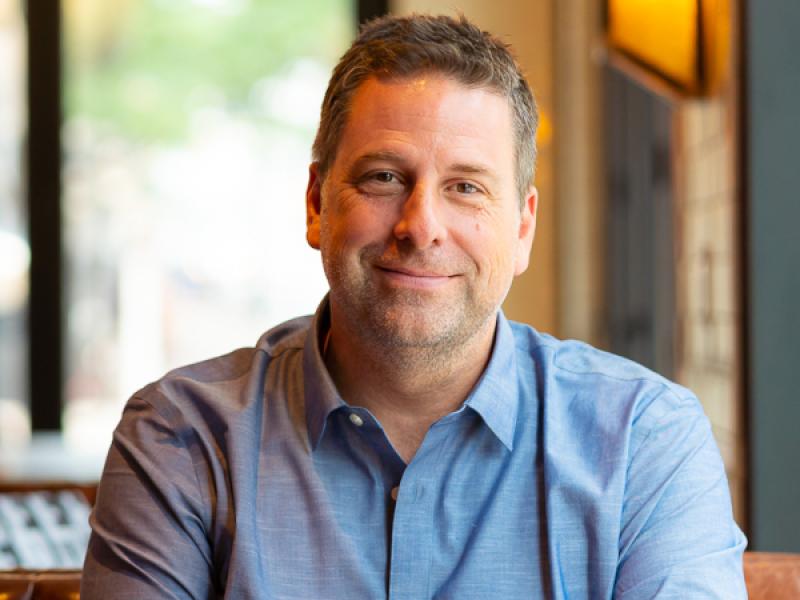
“To go get a steak dinner back then you would be going to a hotel dining room; put on your coat. It’s a night out,” Andy Lewicki, director of sales and franchising at MR MIKES SteakhouseCasual told FoodNX.
“The two brothers, asked, ‘Where can people go to get good value and have a steak dinner out?’”
Once they opened the first location in Vancouver in 1960, it was based on the “red-tray” dining experience, explained Lewicki.
“Back in the day, you went up to the counter, you’d order your steak. ‘How do you want it? Rare, medium?’ You’d have a tray, slide it down, they’d put your potato on, put your medium-rare steak. You get some salad, and then you’d go sit down. At the beginning, there was no full-service. It was very casual.”
Goal to have 100 locations
Fast forward to today, MR MIKES has 50 locations and has a goal to open 50 more over the next five to 10 years. Recently, it announced six new locations in Atlantic Canada, as well as signing a five-store franchise agreement in Ontario.
“A lot’s changed since then but our original store was on Granville Street in 1960 and then they opened up a second one on Granville Street, kind of heading towards the airport in Richmond, and then things took off for them,” Lewicki said.
“Back then it was $1.95 to have a steak dinner and it was $0.85 for a MIKE burger and fries.”
Today, Mike Cordoba and Al Cave own the franchise after they took over the brand in 2009, according to Lewicki.
The company pioneered what it calls SteakhouseCasual, which has now expanded to include what it calls urbanLODGE.
“The urbanLODGE was an idea of: we’re a 100 per cent Canadian owned and operated company, and we’re independent. Our marketing team and our executive team, they’ve done a good job with identifying where we need to grow, so then we said, part of growing the company culture was being fun, having irreverent humour, and keeping us light-hearted as a Canadian company,” he said.
“So urbanLODGE came out of that. You think fishing lodge, hunting lodge: urbanLODGE.”
Focus on human connection
That concept was introduced at MR MIKES more than 10 years ago, and it also included a “games wall” that allowed patrons to play board games, while enjoying the restaurant experience.
“We introduced that in 2013 and now a lot of the brew pubs, they’re doing that but we’ve been doing that for over 13 years to enhance that human connection inside the four walls. One big differentiator for MR MIKES is our mission statement, our values, and our purpose is actually to bring people together for meaningful human connection,” Lewicki said.
So what prompted the franchise to grow its business on the east coast of Canada? “Those are MIKES’ people, there’s no other way to say it,” he said.
Instead of focusing on big cities, the company concentrates on “secondary markets,” explained Lewicki.
“You won’t find a MR MIKES in downtown Vancouver, you won’t find one in downtown Calgary, and you won’t find one in downtown Edmonton, and any of the bigger cities and the reason is, we’re not trying to compete with the great independents or other chains that fuel the downtown places; where to be seen, that kind of thing.”
Despite negative economic headlines, the time is right to expand down east, he said.
“I think the rest of Canada forgets, or they don’t understand, those areas are building, and I don’t want to say the word boom but they’re doing well. We know there’s good opportunity in Atlantic Canada, and there’s definitely the economy and the growth support there.”
"It’s a passion business"
When casting for new franchisees, MR MIKES looks for “passionate entrepreneurs. People don’t have to have restaurant experience, but if they do it’s a bonus, because they understand that it’s a passion business. It’s not a passive investment, it’s not something you’re going to put some money into and in a year, you’re going to go get your dividends,” Lewicki said.
The company is also looking for people who are charity-minded and has a system set up to exploit it.
“We have what we call a local community marketing manager that works with all 50 of our ownership groups to identify those local community marketing initiatives . . . and then get the plan set for them to execute. That’s a full-time gig for one person.”
With its success, the company also sees a bright future in its carved-out niche.
“Restaurants really are resilient in the economy; it doesn’t affect us as much as the media would make people believe because people are going to eat and people are used to the convenience of eating out. The new, younger generations, they’ve been brought up that way; they’re not going to all of a sudden start cooking three squares a day at home.”
“It’s not going to happen,” he said.
EDITOR'S NOTE: The story text has been edited to remove a person's name who is no longer a part of the ownership group. We sincerely apologize for the error.


 Industry Events
 Locations