




 Locations






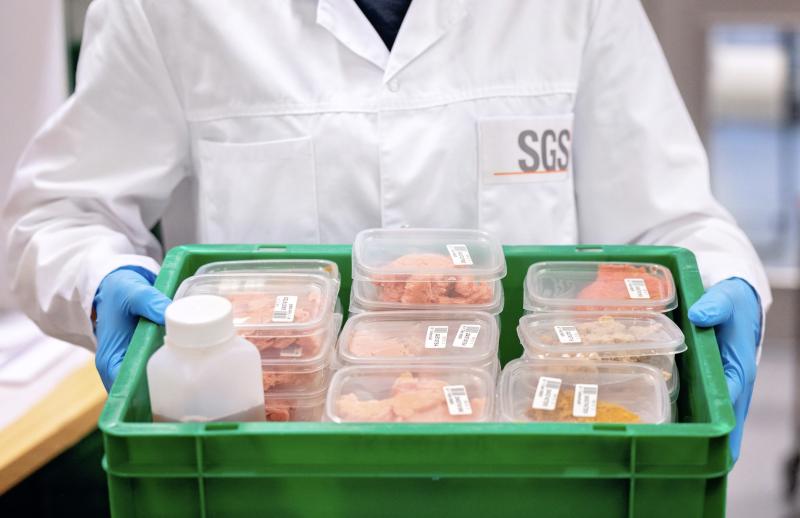
Swiss food testing and inspection giant SGS is expanding its North American footprint with the acquisition of Colorado-based Murray-Brown Laboratories, a move expected to strengthen testing capabilities for Canada’s growing nutraceutical sector.
The deal enhances access to advanced testing and certification services for Canadian companies navigating increasingly complex safety and compliance requirements. SGS operates more than 2,500 laboratories and business facilities across 115 countries, including Canada.
Murray-Brown Laboratories brings specialized expertise in microbial and analytical chemistry testing, supporting North American producers, manufacturers and retailers. Its capabilities include pesticide and mycotoxin detection, ensuring food, pet food and nutraceutical products meet safety and regulatory standards.
Joshua Baisley, head of SGS NutraSource, said the acquisition expands SGS’s microbial and analytical chemistry capacity for food and nutraceutical matrices and provides data packages that directly support Canadian quality programs and U.S. customer and import requirements.
“For Canadian natural health product (NHP) companies, strong third-party testing supports NHP quality expectations, including evidence aligned with product specifications and GMP systems. For food exporters, it supports preventive, documented control systems expected under risk-based programs,” Baisley told FoodNX.
Advancing Canadian food testing
The acquisition will create more opportunities for Canadian businesses to access advanced microbial and analytical chemistry services, enabling faster cross-border certification.
“Canadian manufacturers and producers can leverage the Denver lab as part of SGS’s North American laboratory network, particularly where additional capacity in microbial testing and analytical chemistry can help reduce turnaround times or align with U.S. customer testing preferences,” Baisley said.
The transaction also strengthens SGS’s nutraceutical services with the addition of kratom, kava and hemp testing capabilities. Baisley said it expands access to microbial and analytical chemistry capacity that hemp- and botanical-based brands and manufacturers commonly need to comply with regulations.
“In Canada, regulatory posture differs by product category. SGS can support a category-specific compliance pathway, which is critical because obligations differ depending on whether a product is regulated as cannabis under the Cannabis Act and Cannabis Regulations, or as a natural health product under the NHPR,” he said. “SGS NutraSource has a regulatory sciences division with expertise to ensure proper classification, testing requirements and documentation for compliance.”
Western Canada is also expected to benefit from improved timelines through access to SGS’s Denver facility. Baisley said the acquisition adds regional capacity in the U.S. West and central corridor, helping reduce transit times compared with shipping samples to more distant laboratories.
“SGS is strengthening North American capacity now and will evaluate further investments based on client demand, service needs and network planning under Strategy 27,” he said. Strategy 27 aims to double the company’s North American sales between 2023 and 2027.
With food recalls on the rise, Baisley said the acquisition will help mitigate risk and improve compliance across Canadian and U.S. regulatory frameworks. He noted it will support navigation of North America’s food safety requirements and the increasing complexity of recall management.
Mitigating recall risk
The practical risk-mitigation benefits include more reliable hazard detection, such as pathogen identification and contaminant surveillance including mycotoxins and pesticides, as well as integrated support that enables manufacturers to build defensible compliance records for regulatory oversight and import and export requirements.
“This acquisition adds capacity and capability to our food testing network, enabling clients to immediately access cross-border food safety and quality assurance testing in North America,” Baisley said. “Canada remains strategically important under Strategy 27, and SGS will continue to invest in capabilities and regional network coverage aligned with client demand.”
He added this transaction, along with other recent acquisitions such as Applied Technical Services (ATS), strengthens SGS’s position in North America and marks a major milestone in its ambition to more than double regional sales by 2027 compared with 2023.
“The complementarity of offerings opens significant cross-selling opportunities to synergistic industries, such as carbon-14 testing to verify the percentage of renewable, plant-sourced ingredients in food, ingredients and products provided by SGS Beta Analytics, another recent acquisition in our environmental division,” he said.


 Industry Events
 Locations
